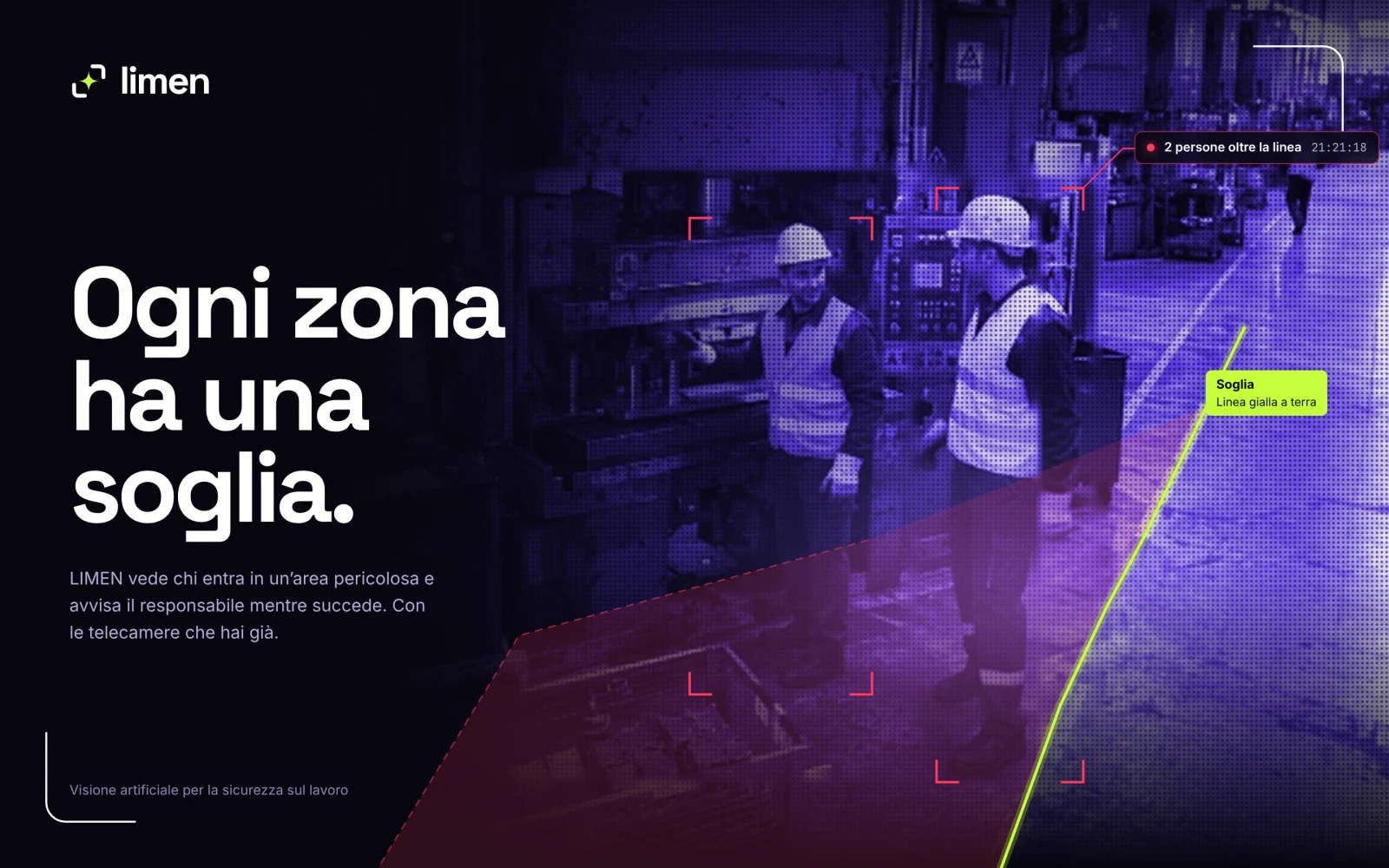
Every year in Italy tens of thousands of workplace injuries occur. Behind almost every one there was a signal that came before: PPE not worn, a restricted area crossed “just for a second”, a vehicle and a person too close together. Signals that a camera captures but that no one sees in time, because watching twenty monitors all day is impossible for a human being.
That is exactly the job that artificial intelligencedoes well: watching without tiring, recognising a hazardous situation and alerting the moment it occurs. Not to surveil people — to protect them. I'll show you how it works with a real case, LIMEN, and with a demo that actually runs: the computer vision you see working below is not a fake video, it is a model analysing images in your browser.
See it in action: the control room
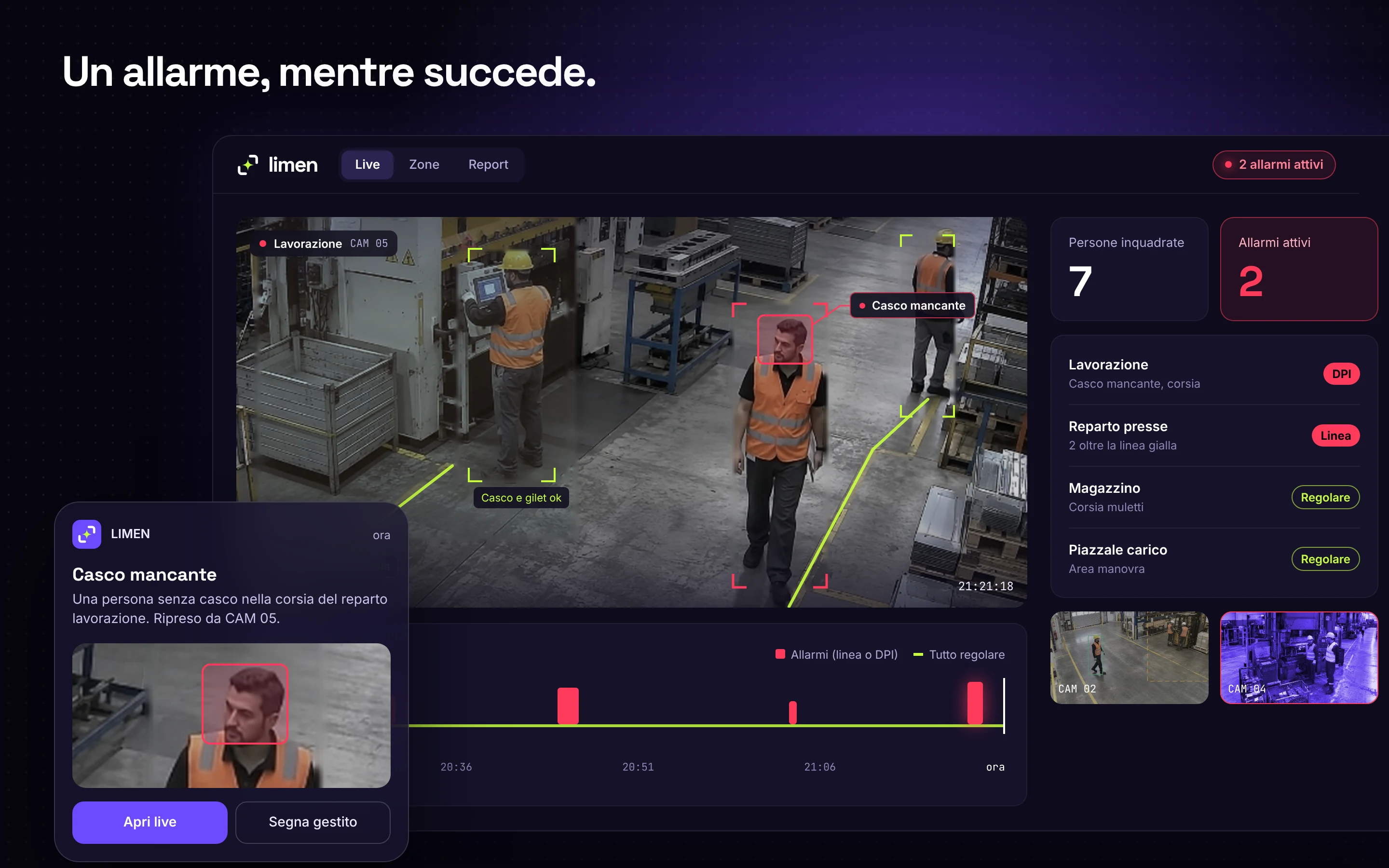
Before the theory, watch it move. This is the control room: multiple cameras at once, each with its own zones and rules. The AI recognises people, checks PPE and positions, and when something is wrong the cell turns red and the alarm fires — with a screenshot of the moment logged in the register. Enable the webcam on a cell to see it recognise you in real time.
The problem: the risk no one sees in time
Safety today is almost entirely about after: training courses, signs, registers, and accident analysis once it has already happened. Cameras serve to review what went wrong, not to prevent it. The safety officer (RSPP) knows exactly where the critical points are, but cannot be everywhere at once. So the helmet removed for five minutes, the forklift that grazes a person, the safety door left open go unnoticed — until one time in a thousand they end badly.
What AI does: three things a human can't do 24/7
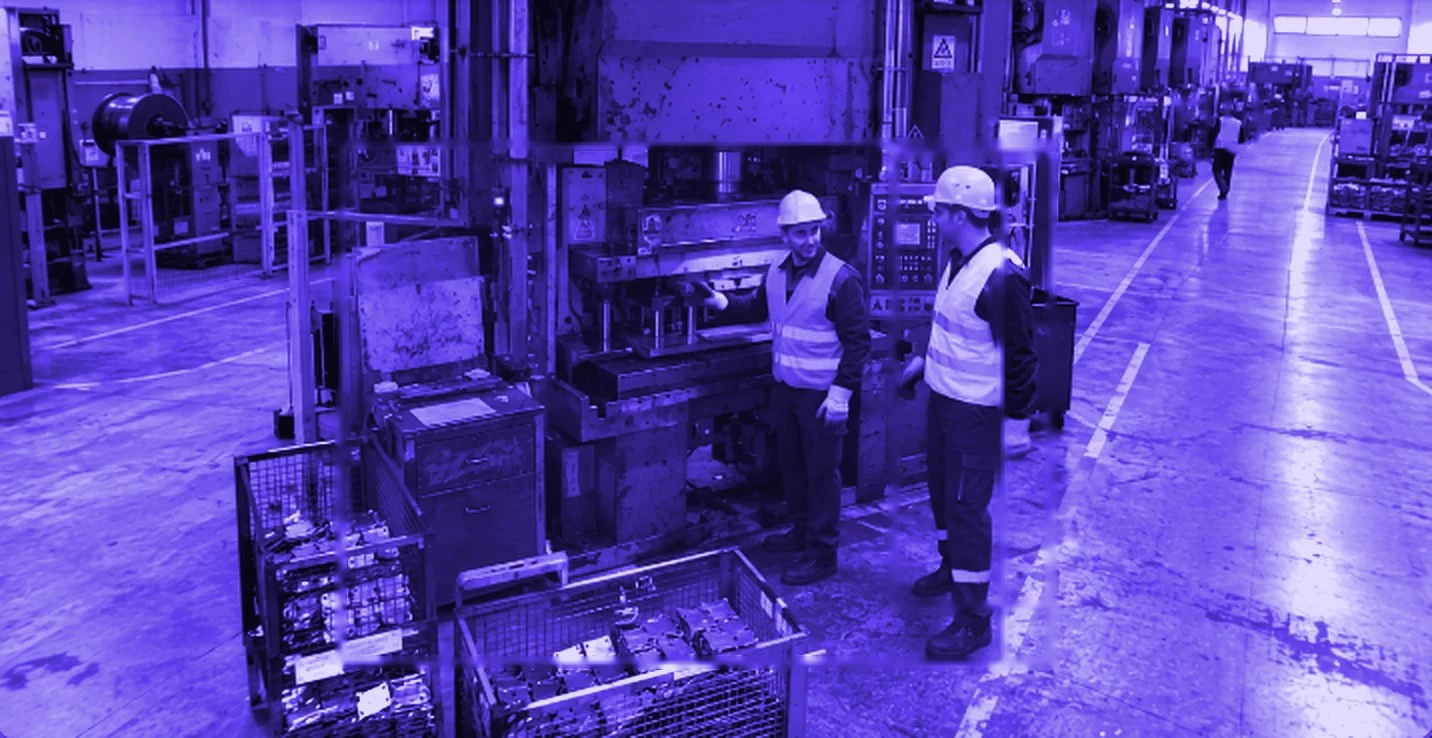
Computer vision does not get tired, does not get distracted and takes no breaks. On the same image the camera already produces, it does three things in parallel, on every frame:
- Checks PPE — recognises people and verifies they are wearing helmets and hi-vis vests where required.
- Monitors zones — if someone enters a restricted area or comes within range of a moving vehicle, it detects it.
- Logs near misses — person-machine close calls, the ones that usually go unreported.
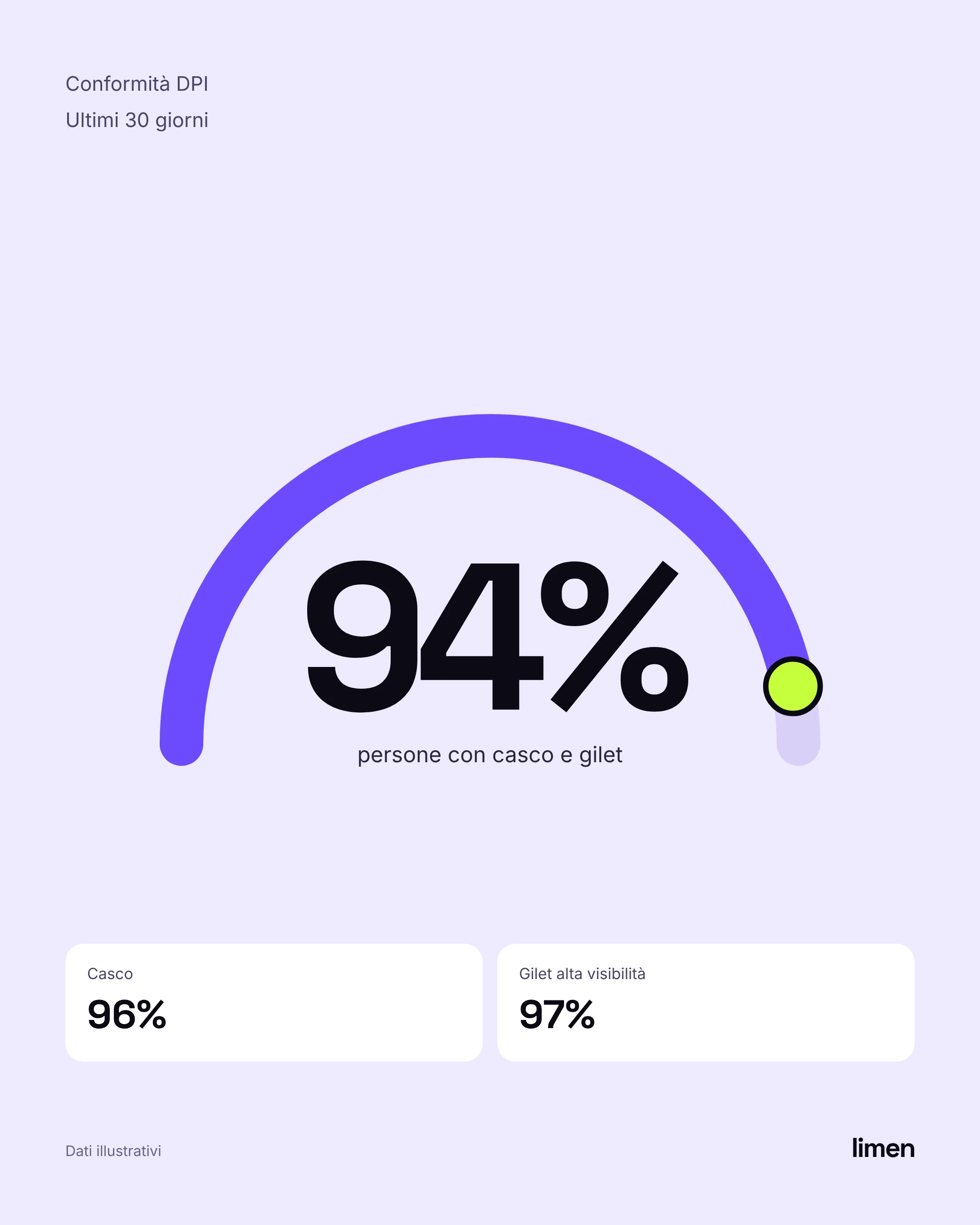
When a rule is violated — PPE missing, zone breached — the relevant camera triggers an alarm the instant it happens, not at the end of the shift. That is the difference between “we reviewed the footage and indeed…” and “stop, you're not wearing your helmet”.
On-device: compliant, without sending faces to the cloud
This is the point that separates a toy from a system a company can actually deploy. Processing happens locally, on-site (on-device): images never go to any cloud, are never stored to profile anyone, and the system does not measure employee productivity — something expressly prohibited. It detects only the safety event and saves a screenshot of that instant.
The Italian Data Protection Authority (Garante) in its 2026 rulings reaffirmed the boundaries on intelligent video surveillance: safety purposes yes, remote monitoring of workers no. For this reason LIMEN must always be configured in compliance with Article 4 of the Workers' Statute — with a union agreement or authorisation from the Labour Inspectorate — and following a data minimisation approach: the system looks at the risk, not the person.
Where the alert goes
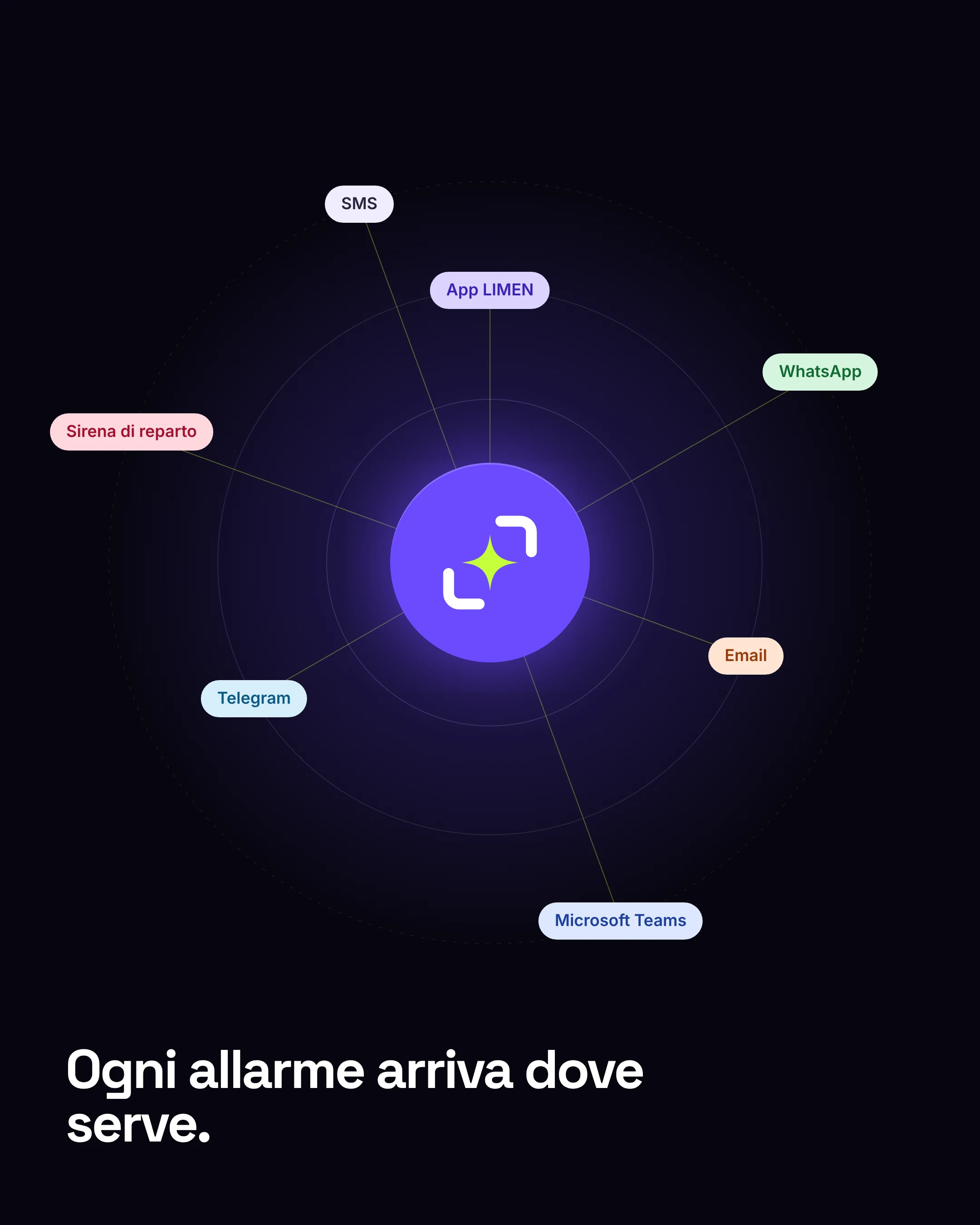
Seeing the risk is not enough: the alert must reach someone who can act, and fast. LIMEN triggers it where it is needed — the gatehouse monitor, the supervisor's phone, a message to the safety officer — with the photo of the moment and the camera that generated it. Nothing to search for: you can see what happened, where and when.
Near misses: why now
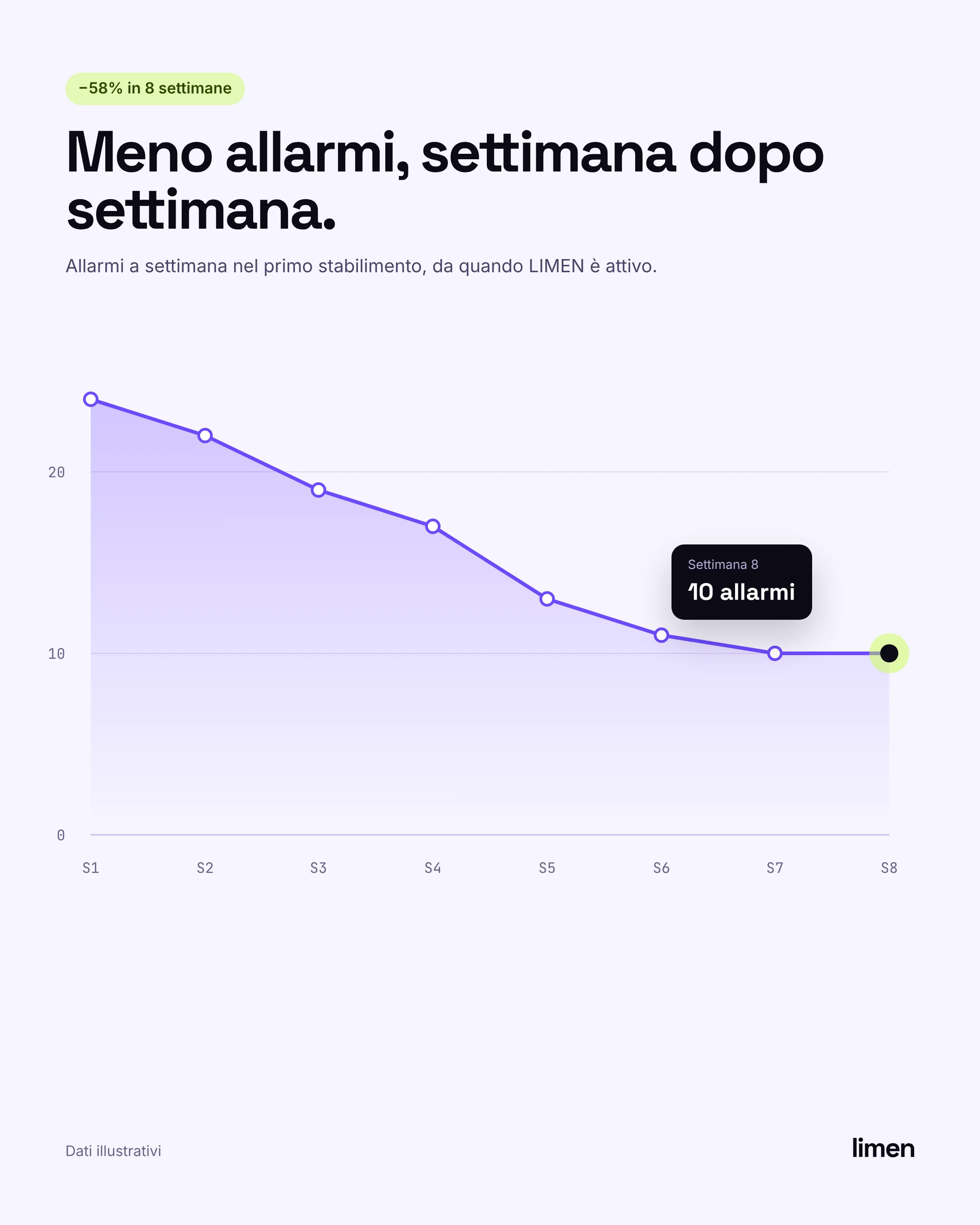
There is a reason this topic took off in 2025. The new workplace safety legislation (Law 132/2025 and the Safety Decree) tasked INAIL with promoting smart PPE and the collection of near misses — incidents that almost happened. The data-backed idea is straightforward: near misses anticipate real accidents, and a company that analyses them prevents far more than one that waits for an injury to occur.
The problem with near misses is that they have to be reported, and almost no one does it: who stops to fill in a form for an accident that did not happen? This is where AI changes the rules: it logs them automatically, with date, camera and image. INAIL is already building models and guidelines to collect them — such as the model for construction companies — and having an automatic, objective source is a huge advantage.
No need to replace your cameras
The question everyone asks: “do I need to redo the whole installation?”. No. LIMEN connects to the IP cameras you already have (RTSP/ONVIF streams): the intelligence runs on the existing video feed. All you need is a small local computer that processes images on-site — no cloud video subscriptions, no new capture hardware. Start with one camera, one zone, one rule, and scale when the value is proven.
What about your industry? The same engine, anywhere
LIMEN was designed with manufacturing in mind, but the engine — camera → recognition → rule → real-time alert — applies wherever there are people, vehicles and mandatory PPE:
- Construction sites: helmets and harnesses, zones beneath suspended loads, unprotected edges.
- Logistics and warehouses: pedestrians and forklifts, manoeuvring areas, loading docks.
- Paper and converting: distances from presses and winders, access while machines are running.
- Chemical and food: specific PPE, contamination zones, mandatory routes.
- Ports and yards: heavy vehicles and pedestrians, restricted parking areas.
The context changes, the principle does not: see the risk before it becomes an injury.
Under the hood: how it works, briefly
It is not magic — it is a chain of vision models working together. One model detects people and objects in the image; a second layer checks whether there is a helmet in the head area and whether the person is wearing a hi-vis vest; a zonelogic verifies who enters where they should not and measures person-machine distances. The demo here uses a general-purpose model in the browser so you can experience the mechanism first-hand; in production a model trained on the site's actual PPE is used — far more accurate — running on the local computer next to the cameras.
Frequently asked questions

Want to see the risk before it becomes an injury?
LIMEN is one of the things I build: custom AI products that do a precise job. If you already have a camera system and want it to become a prevention platform — PPE, zones, near misses — it can almost always be done starting small. Take a look at the other work in the Lab, or send me a message on LinkedIn and we can figure out together where to start.
Open the control room (live demo)