

You know that steady stream of messages that arrives every day? A customer writes “can you give me a quote?” with a photo of a broken part. Another sends a thirty-second voice note. A third types two hurried lines full of abbreviations. Replying properly to all of them — figuring out what they want, finding the right thing, writing the quote — takes hours. Hours stolen from real work.
An AI agentcan handle it for you: it reads the message as it arrived, understands what's needed, searches your data and prepares the quote for you to approve. Here I walk you through it step by step with a real case, Telaio, the assistant for auto parts dealers. Then we'll see how the same pattern applies to any business — yours included.
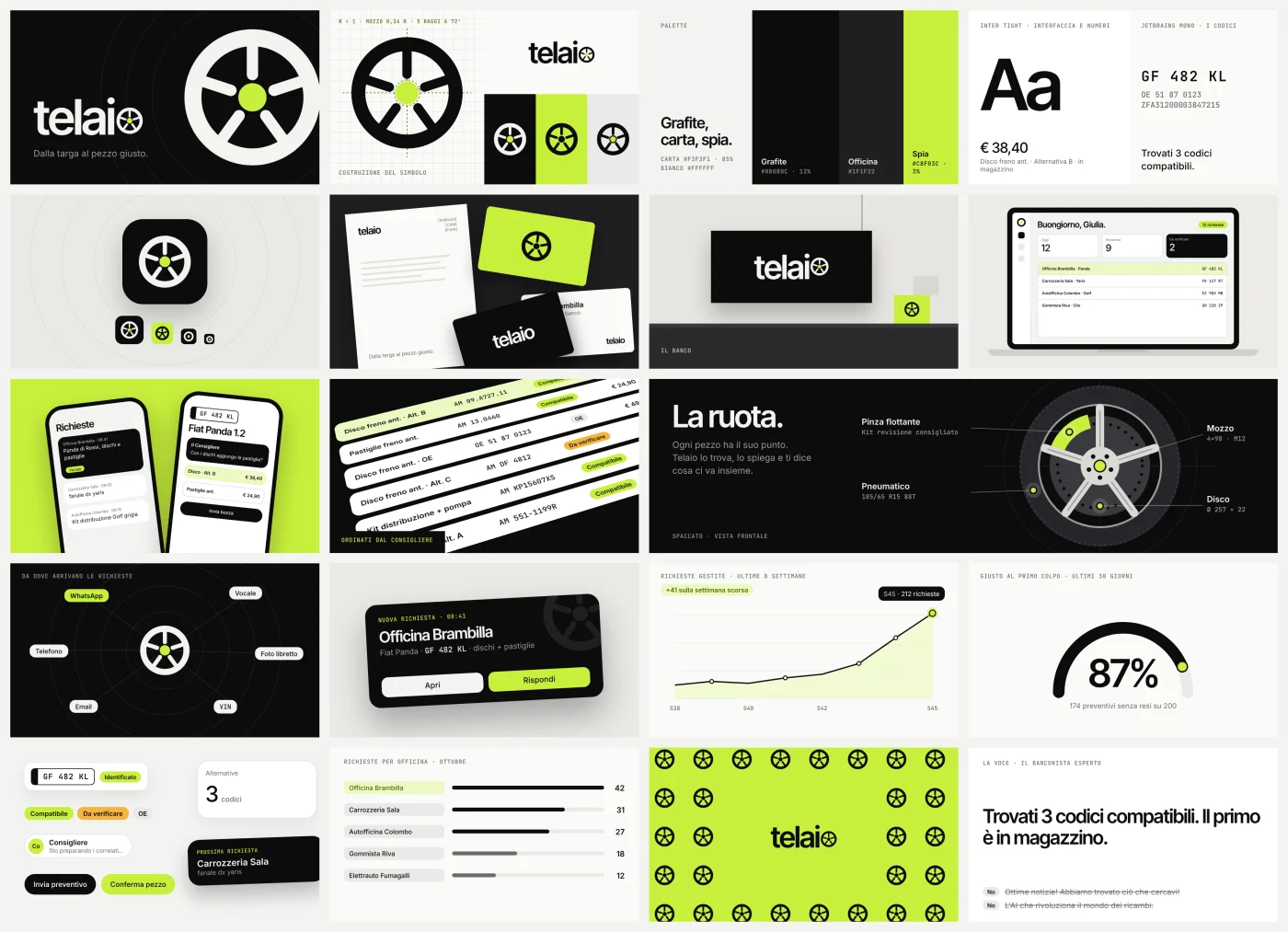
The full loop, in half a minute
Before the details, watch it in action: from the customer's WhatsApp message all the way to the sent quote, through automatic lookup (what they need and where to find it) and the dealer's approval. It starts on its own — and you can step back through every phase.
The problem, before AI
In a parts shop the day is a barrage of requests: a message, a photo of the registration document, a voice note with three parts named three different ways. Every time it's the same manual slog: identify the car, decode the jargon, open the databases, cross-reference the codes, check compatibility, write the quote. A good five minutes, multiplied by dozens of times a day. The exact same problem exists for the plumber, the wholesaler, the professional practice, the e-commerce store: requests that arrive however they like, and a mountain of manual work to respond.
Step 1 — The request arrives on WhatsApp
The first principle: don't ask the customer to change their habits. The AI accepts the message exactly as it comes in — a hasty text, a voice note, a crumpled registration card photo — on the channel the customer already uses. No app to download, no form to fill in.

Try it yourself: in the demo below choose how the request arrives (message, voice note or photo) and watch what happens.
Step 2 — The AI reads and understands
This is where the intelligence lives. The agent interprets the message: it transcribes the voice note, reads the photo, recognises the plate number or chassis number, and above all understands the trade jargon— “f oil”, “front brake pads”, the thousand different ways of naming the same thing. In one second the car is identified with precision.
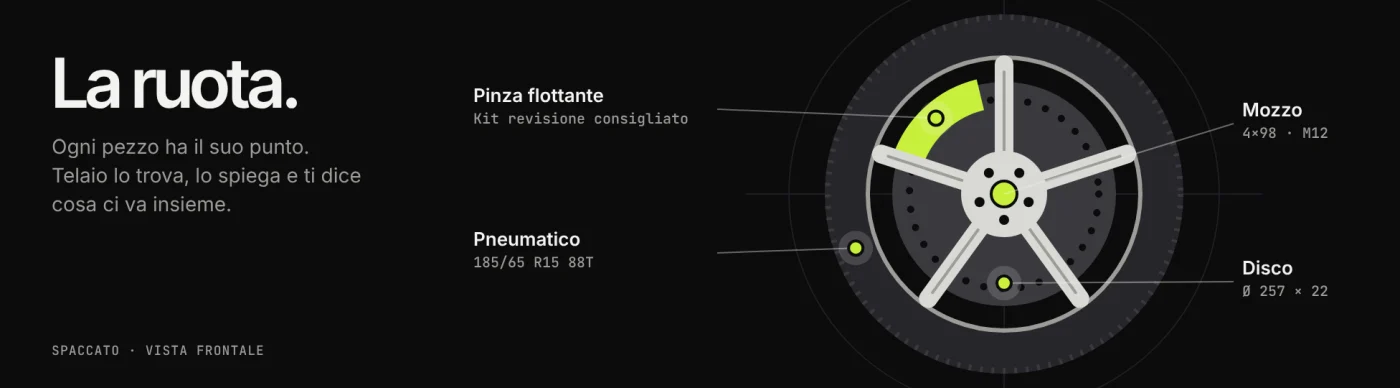
Step 3 — Search and find, with the right codes
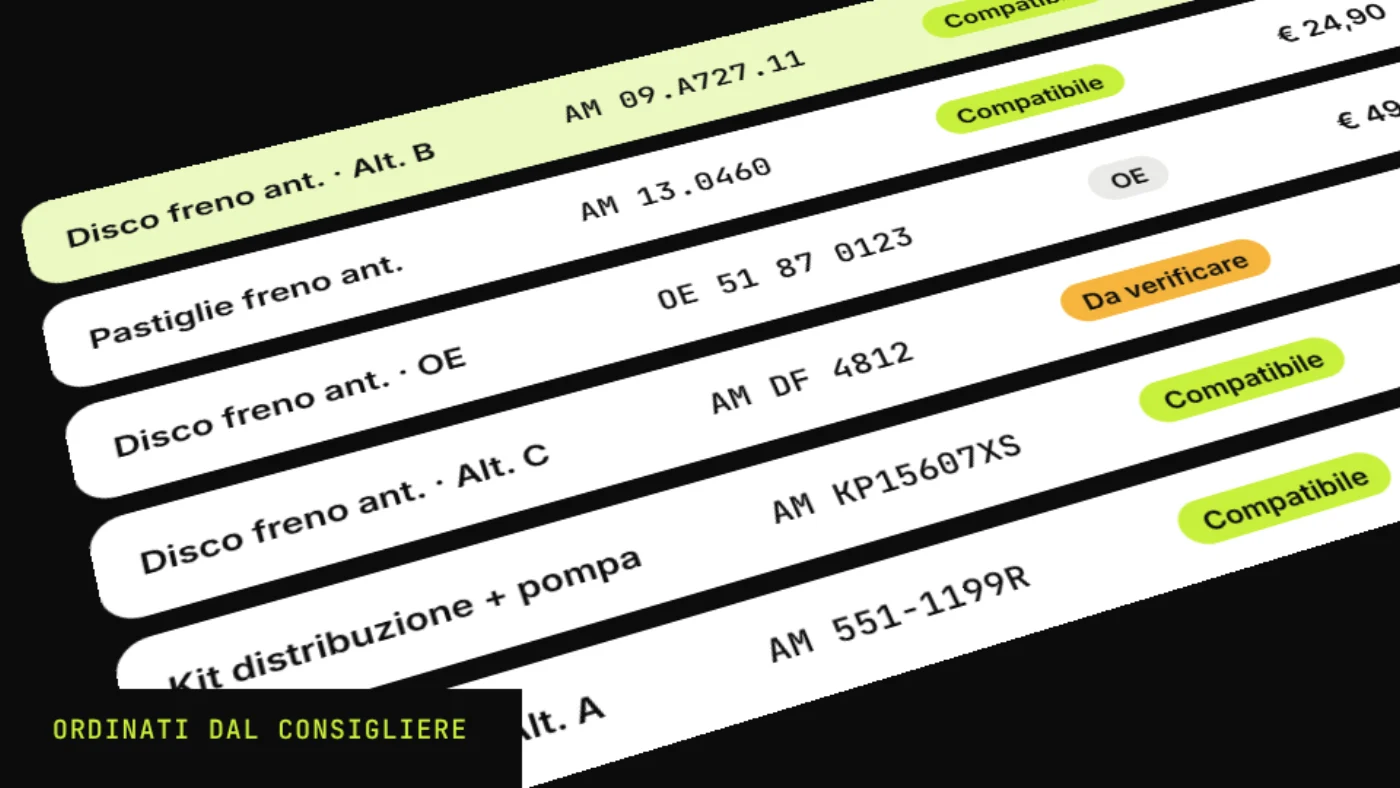
Once the car is identified, the agent navigates the databases and finds the parts: original OE code, aftermarket equivalents, alternatives. Every result comes with its compatibility statusand price — prioritising whatever is already in stock. It's the work of an experienced counter hand, done in a few seconds.
The two sides of the flow
Here is the important point — the one that is often misunderstood. The customer's request does not disappear into an invisible bot that replies on its own. The flow has two sides:
- Customer side — the garage, the private owner, the mechanic: writes on WhatsApp as they always have.
- Business side — the dealer, at their counter: sees the request arrive already pre-processed, makes the decision and issues the document.
The AI sits in the middle and does the heavy lifting for the operator, not instead of them. Let's see what happens on the other side of the counter.
At the counter: what the dealer sees
As soon as the customer writes, a new request appears on the dealer's panel — with the sender, the time and the original message (text, voice note or registration photo). Nothing gets lost, and the operator always knows who asked what. Next to it, the AI has already done the groundwork: the vehicle identified from the plate, the parts found with OE and aftermarket codes, compatibility, prices and suggestions (“if you're replacing the discs, the pads need to go too”). The dealer doesn't start from scratch: they start from a search already done.
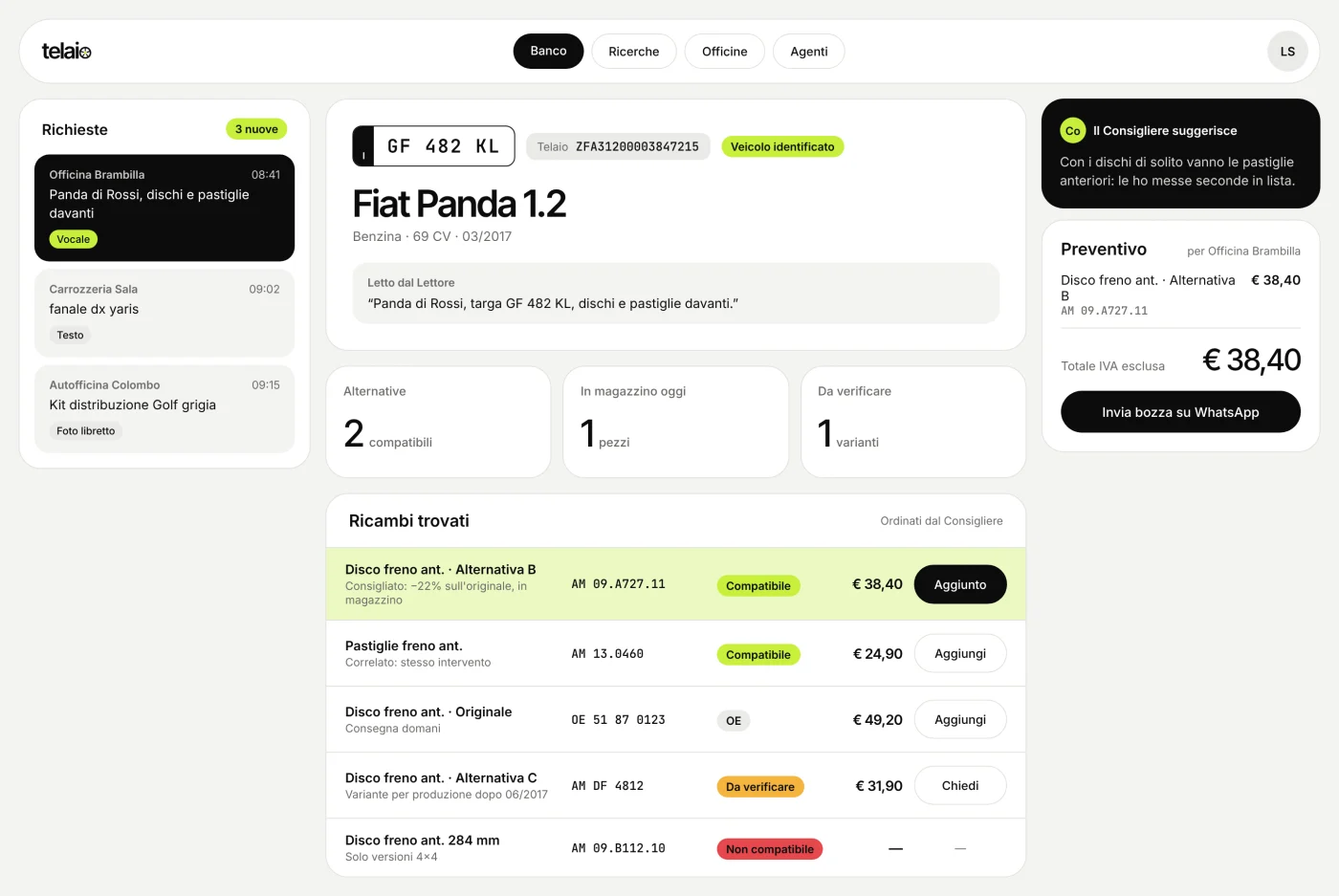
Processing the request and generating the document
From here the operator has full control. In a few clicks:
- choose the right option — original, aftermarket equivalent, or what is already in stock;
- check the compatibility the AI flagged and remove anything that isn't needed;
- add related parts with one click;
- compose the quote or delivery note — parts, codes, prices, total — ready to send or print.
The final word always belongs to the human: the AI does the legwork, the dealer makes the call and issues the document. The draft then goes back to the customer on the same WhatsApp, or becomes a delivery note in the management system the business already uses. No double entry, no copy-pasting.
Try it yourself — this is exactly the counter view: pick a request on the left, build the parts list, watch the quote take shape on the right and hit “send draft”.
The result: from five minutes to a few seconds
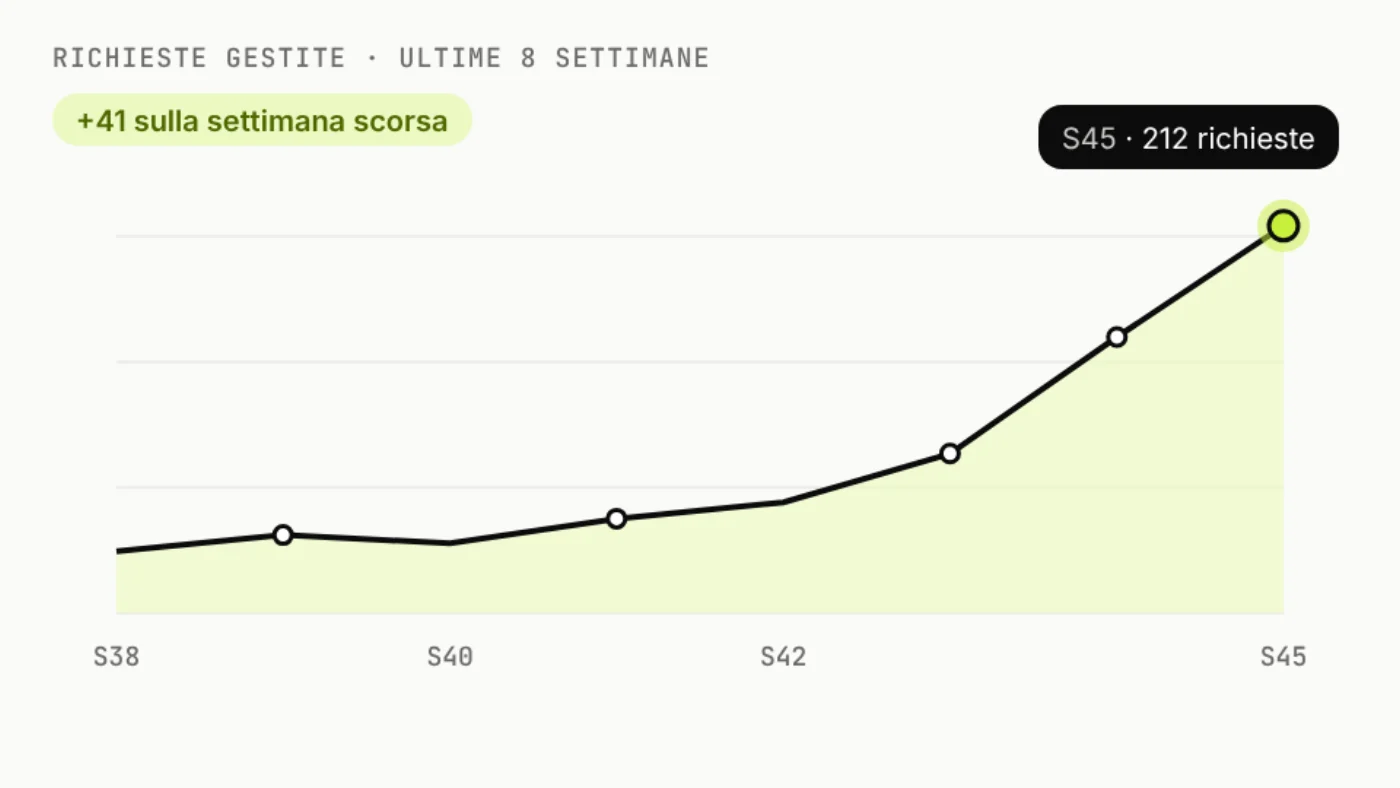
A manually handled request costs an average of five minutes. With an AI agent it takes a few seconds. Across dozens of requests a day that is hours freed up for every person — time that goes back to the customer, not to the databases. And the faster you respond, the more quotes you close: speed is not just convenience, it is more revenue.
Under the hood: four agents, not a chatbot
The difference between a “chatbot” and a true vertical AI agent is that here a single model is not doing the work: a team of agents is, each handing off to the next, each specialised in one thing.
- The Reader interprets the message (text, voice, image) and identifies what is needed.
- The Searcher navigates the data, recognises the jargon and finds the correct result.
- The Advisor ranks the options, suggests related items and prioritises what you have available.
- The Checker verifies everything and flags anything that needs a second look, so nothing wrong goes out.
And in your sector? The same blueprint, everywhere
Telaio is about auto parts, but the pattern — natural-language request → understanding → search in your data → draft ready to approve — is identical across dozens of industries. Some concrete examples:
- Plumbing and construction: photo of a part or a boiler → right replacement and quote.
- Wholesalers and distributors: orders via WhatsApp → matched to the catalogue with stock confirmation.
- Professional practices: client request → answer, right documents and appointment proposal.
- E-commerce and retail: product questions → instant reply, sizes/compatibility and upsell.
- Estate agencies: “looking for a two-bedroom in zone X” → matching properties and ready summary sheet.
- Catering and events: catering or booking request → draft quote generated automatically.
The sector changes, the engine does not. It is always an agent that understands how people actually talk and turns it into work done.
Frequently asked questions

Want an agent like this for your business?
Telaio is one of the things I build: custom AI products that do a precise job, better and faster. If you receive requests and lose time replying or putting together quotes, there is almost always a way to automate it. Take a look at the other work in the Lab, or send me a message on LinkedIn and we'll figure out together where to start.
Try the live demo